Specialized AI Applications: How Industry-Specific AI is Solving Real-World Problems in 2026
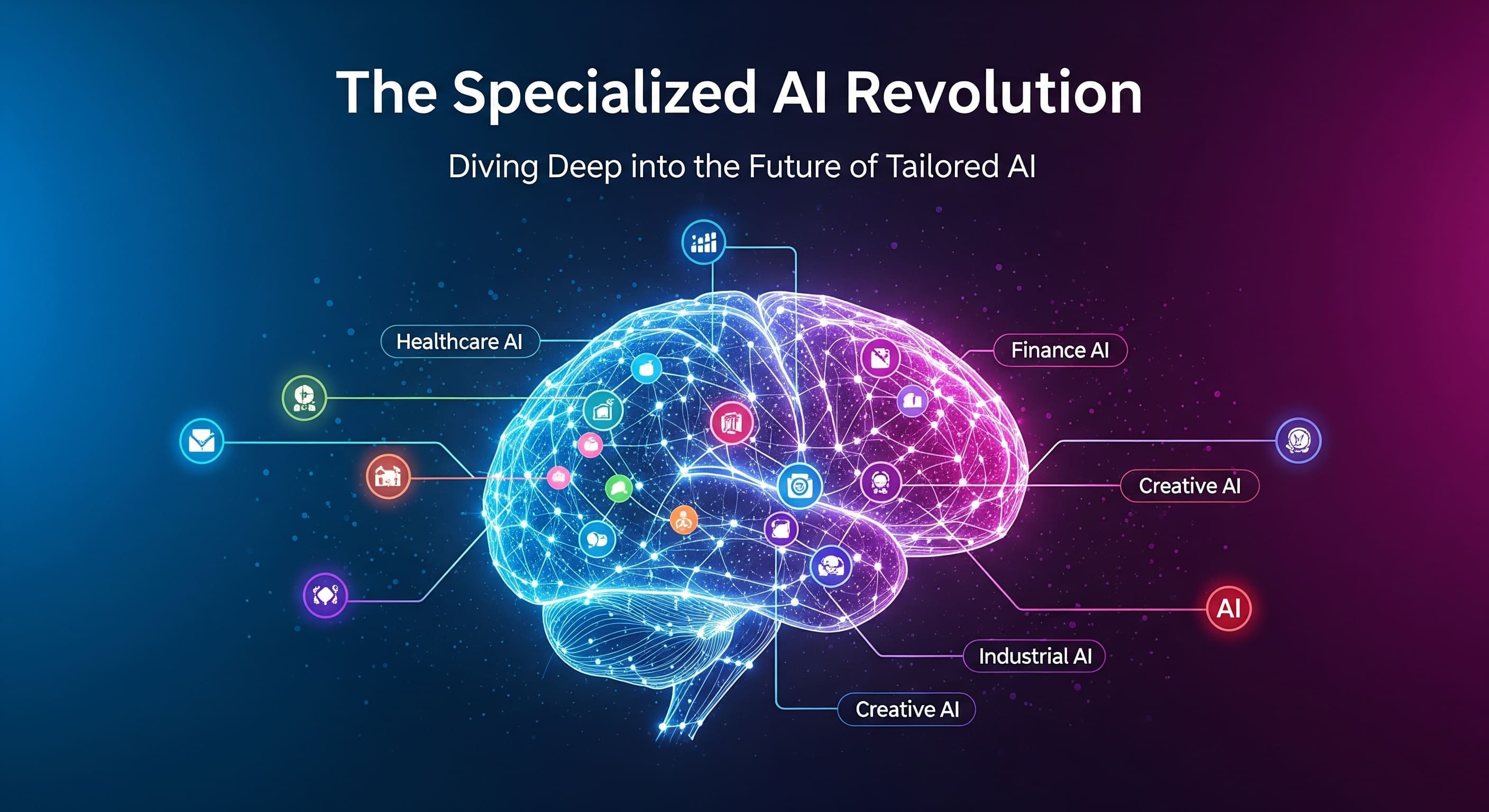
Specialized AI isn't just smarter, it's tailored. In 2026, AI isn't one-size-fits-all: it's deeply woven into healthcare, law, agriculture, retail, you name it, making a real difference in day-to-day life and high-stakes decisions.
- --
Why Industry-Specific AI Matters More Than Ever
Generic AI is like a Swiss Army knife, capable, but not always optimal. Specialized AI, on the other hand, is like a custom tool: sharper, safer, and aligned with the task at hand. In fields like medicine, compliance, and finance, bespoke models bring:
- Precision and trust, fine-tuned for mission-critical environments.
- Speed and savings, processing data faster and often more cost-effectively.
- Compliance frameworks, built-in awareness of regulation, ethics, and domain norms.
- --
Real-World Stories: AI Making an Impact in 2026
Healthcare, AI That Saves Time and Dollars
In 2025, OpenEvidence emerged as a go-to AI tools for U.S. clinicians. Their free search engine returns fully-cited medical answers in seconds, used daily by ~40% of U.S. physicians, crushing the slower legacy tools. (Wikipedia: OpenEvidence)
Meanwhile, Counterforce Health lets patients automatically appeal insurance denials. Launched in 2025, their AI-generated appeals achieved ~70% reversal success and helped rural clinics deliver faster decisions. (Wikipedia: Counterforce Health)
- Healthcare Hero:* OpenEvidence and Counterforce Health show how specialized AI is turning tedious, high-stakes tasks, like diagnosis and claim appeals, into streamlined, life-impacting workflows.
:::
Legal, When AI Partners With Lawyers
In Arizona, Eudia Counsel opened an AI-augmented law firm, combining human lawyers with advanced tools to handle contract and M&A diligence for big clients like DHL, Stripe, and the U.S. government. (source from Reuters, 2025)
And in the U.K., Harvey powers large law firms like Allen & Overy and PwC, helping lawyers tackle document analysis and insights, though with a healthy dose of caution and validation. (Wikipedia: Harvey software)
Finance & Small Business, AI That Frees Up Human Potential
In banking, AI pilot programs at Goldman Sachs, JPMorgan, and UBS are already handling junior bankers' rote tasks, freeing human talent for strategic work. (source from FN London, 2025)
Meanwhile, small businesses, especially in the UK, are quietly benefiting too: AI tools are powering marketing, customer support, and staffing, boosting productivity by up to 101%. (TechRadar, SMEs and AI)
- --
Specialized vs. General-Purpose AI: A Quick Comparison
| Feature | General-Purpose AI | Specialized AI (2026) |
|---|---|---|
| Accuracy | Broad but inconsistent | High, domain-focused |
| Compliance | Afterthought | Built-in (e.g., HIPAA, GDPR) |
| Adoption | Fast, widespread | Slower, but mission-critical |
| Examples | GPT-like tools | OpenEvidence, Eudia, Counterforce |
- --
Why Focused AI Works Better, and What's Next
1. Precision matters. In clinical care or legal compliance, general models just don't cut it. Domain-trained AI reduces error and boosts trust.
2. Human + AI = the best combo. Most systems today, like healthcare triage bots or legal assistants, lean on hybrid intelligence. AI handles grunt work; humans validate. (FT on legal AI agents with oversight)
3. ROI is real, but nuanced. While 78% of organizations now use AI for at least one function, many specialized AI projects still struggle with integration or measurement. (Stanford AI Index, Investopedia MIT study)
4. Adoption is growing, but cautiously. In 2025, only 38% of SMBs used AI for core tasks, while 77% of UK small businesses saw productivity gains within three months. (Verizon SMB survey, TechRadar on SMEs)
- --
What's Ahead: AI's Next Moves
- On-device AI: Imagine diagnostics or legal triage done offline, faster, more confidential.
- Autonomous agents in regulated fields: Especially in law, banking, and healthcare, provided oversight stays in place.
- Built-to-purpose agents: Systems like the AI-powered legal framework LICES are reducing research time by 90% while hitting 98% accuracy. (arXiv LICES paper, 2025)
- --
Final Thoughts
In 2026, specialized AI is not a trend, it's indispensable. Across industries, these models are transforming how professionals work, make decisions, and serve people.
Whether it's speeding up diagnosis, automating complex legal reviews, or lifting the operational load from small businesses, the best AI of today is precise, trustworthy, and tailored to the task.
- --
Sources include Stanford's 2025 AI Index, recent newsroom reports, and leading AI case-study platforms.